

Real questions from real calls — and the reasoning behind the answers.
“Who qualifies for extra help with Medicare” is one of the most common phrases that brings people to me, and it usually means one of two different things tangled together. Sometimes it means the federal Extra Help program, which lowers what you pay for prescription drugs. Sometimes it means something bigger — qualifying for both Medicare and Medicaid at the same time, which changes the shape of the whole decision, not just the price tag.
On the phone it comes out differently depending on where someone is standing. One man asked me directly:
Michael, is there a bunch of hoops I got to jump through with the Medicaid? Like, I’m going to have to get my employer to sign off on certain things and verify my income and all that stuff.
A widow I spoke with wanted the opposite outcome — off Medicaid eventually, not onto it — because of what she’d heard about the state making a claim on property later. Both of those calls start in the exact same place: figuring out precisely where someone stands before we talk about any plan at all.
Grab a time and I will tell you straight which path fits — and which does not.
Use the ZIP-code plan search. Availability changes by county, not by article.
How does this come up on a real call?
Most people don’t arrive already knowing the vocabulary. They know their income is tight, or a caseworker mentioned something, or they’ve heard the phrase “dual eligible” in a commercial and aren’t sure if it applies to them. The confusion is genuine, not resistance.
my concern is I have no income right now… And I wouldn’t be able to pay for Medicare anyway
That fear is exactly why Extra Help and Medicaid exist. Medicare was never built to be premium-free across the board, and for someone living on very little, the standard premiums and copays that work fine for most retirees can be genuinely unworkable.
Other calls start from a different direction — someone’s already on Medicaid and something shifted, or they’re comparing notes with a neighbor and starting to wonder if their own situation is unusual.
I don’t have a problem with this, but I hear these people talking. They’re paying you a thousand dollars a month for medical, and I’m just like, wow.
That comparison is often the first hint that someone doesn’t realize their situation is unusual in a good way. Dual eligibility isn’t a consolation prize. Set up correctly, it’s frequently the strongest coverage available, full stop — no premium, no meaningful copays, and extra benefits layered on top.
What do I ask before we talk about plans?
Before I’ll recommend anything, I need to know exactly where someone stands. These are the questions I actually ask, in the order I ask them, because each one changes what comes next.
- Are you on Medicaid right now, or do you think you might qualify? This is the fork in the road. Confirmed dual-eligible status opens a different set of plans than someone who might qualify but hasn’t applied yet.
- What’s your income, and what savings or retirement accounts do you have? Both Medicaid and Extra Help use income and asset limits, and the exact number moves depending on whether you’re single or married. I ask this one plainly: “Do you have any type of 401k IRAs, anything that you would need to get transitioned over?” A retirement account counts as an asset. I’ve had to tell more than one person, as gently as I can, that leaving it off the paperwork isn’t a strategy — the state checks, and money gets clawed back.
- Did anything change recently — a raise, a retirement, an inheritance? Medicaid eligibility isn’t permanent. I’ll ask directly: “They told you because of your husband got a raise or something is what happened with the Medicaid?” It happens more often than people expect, and it usually shows up as a surprise letter rather than a phone call.
- Do you need help getting to appointments? This matters because some dual-eligible plans include transportation as a real, usable benefit rather than a footnote.
- Are you worried about owning property down the road? This comes up more than you’d think, and it deserves an honest answer rather than a brush-off.
I would like to be able to get rides paid for because right now, the only way to get me to a doctor’s appointment is in, you know, a special van because I have to be loaded on with a wheelchair.
if I acquire any type of property, if I buy a lot of land or buy a house or something, then they have to be the beneficiary.
Those last two aren’t hypothetical questions on a form. They’re the actual reasons someone leans toward Medicaid or leans away from it, and I’d rather hear them early than after we’ve already built a plan around the wrong assumption.
- 1Are you on Medicaid now?Confirmed status opens different plans than ‘might qualify’
- 2What’s your income and savings?Both programs use limits that move by household size
- 3Did anything change recently?A raise or retirement can shift eligibility overnight
- 4Do you have a 401k or IRA?Retirement accounts count as assets and must be reported
- 5Do you need transportation help?Some dual-eligible plans include real ride benefits
- 6Worried about owning property?Changes what a state can claim back later
Where does this usually land?
Nearly every one of these conversations lands in one of a few places, depending on what the first few questions turn up.
Full dual eligible. Medicaid confirmed and active alongside Medicare. Here, Medicaid picks up most of what Medicare leaves behind — the coinsurance, the deductibles, often the Part B premium itself. There’s usually no reason to add a Medicare supplement, because Medicaid is already doing that job. The plan choice becomes a Medicare Advantage plan built for dual-eligible members, chosen for network and extras like dental, vision, hearing, and sometimes transportation or a grocery allowance. As I put it on one call: “If you get Medicare and Medicaid, you won’t have any co-pays, and you’ll get extra dental vision and hearing and stuff like that.” The trade: you’re inside that plan’s network, and you generally can’t also buy a supplement while Medicaid is active.
Extra Help only. Someone qualifies for the federal program that lowers Part D drug costs but doesn’t have full Medicaid. This is a real benefit, but a narrower one — it touches your drug plan, not your Part B premium or your medical copays. Original Medicare plus a Supplement, or a Medicare Advantage plan, is still very much a live decision here, same as if Extra Help weren’t in the picture.
Medicaid pending or unclear. More common than people expect. Sometimes one system shows Medicaid active and another doesn’t, or an application is in process and hasn’t cleared yet. I won’t recommend enrolling in anything permanent until that status is confirmed one way or the other, because the wrong assumption here is expensive to unwind.
Neither program. Income and assets are above both sets of limits. This is back to the standard weighing of a Medicare Advantage plan against Original Medicare plus a Supplement, on its own merits, without Medicaid or Extra Help changing the math.
See where you land. If you would rather just talk it through with someone who does this every day, Most people can sort the direction quickly once the doctors, drugs, budget, and timing are on the table.
Why do I lean the way I lean?
When someone is confirmed dual eligible, I lean toward keeping them on a Medicare Advantage plan built for that status rather than pushing toward a supplement, and the reasoning is simple: a supplement’s whole job is to cover the 20% Medicare leaves behind, and Medicaid is already covering that gap. Paying a monthly premium for a benefit Medicaid already provides isn’t caution — it’s a needless expense on top of coverage that’s already doing the work.
The cost of being wrong here isn’t abstract. If Medicaid lapses — and it can, for reasons as ordinary as a spouse’s raise — the dual-eligible Advantage plan may no longer fit, because the reason it worked was Medicaid filling the gaps. That’s why I ask about income changes early rather than treating dual status as a permanent fact.
There’s a second piece of reasoning underneath this. Losing Medicaid typically opens a guaranteed-issue window to buy a supplement without answering health questions. That window matters, and it’s exactly the kind of detail that gets missed when someone assumes their coverage situation is settled for good. I’d rather flag it now, while it’s still hypothetical, than have someone discover it only after the window has already started closing.
When would I tell you the opposite?
This is the section that matters most, because dual eligibility isn’t a status you get once and keep forever, and treating it that way is where people get hurt.
When Medicaid is genuinely on the edge. If income sits right at the line — a part-time job, a spouse about to retire, a raise that hasn’t hit yet — I don’t treat dual-eligible status as settled. I’d rather have the guaranteed-issue conversation early, so that if Medicaid does lapse, there’s already a plan for what happens next instead of a scramble.
When only Extra Help applies, not full Medicaid. These get confused constantly, and the confusion has real consequences. Extra Help lowers drug costs. It does not replace the need to decide between a Medicare Advantage plan and Original Medicare plus a Supplement. I’ve had people assume Extra Help meant they didn’t need to think about the rest of their coverage, and that’s simply not how the program works.
When the systems disagree. More than once I’ve pulled up someone’s file and found one system showing Medicaid active and another showing it lapsed or never started. When that happens, I don’t enroll in anything until I’ve made the calls needed to confirm which one is right. Enrolling on a guess, in either direction, is how people end up with a plan that doesn’t match their actual status.
When the network doesn’t fit. A dual-eligible plan with no copays is still a network plan. If someone’s specialists aren’t in it, the savings on copays don’t mean much if they can’t see the doctor they’ve been seeing for years. That’s a real trade, and it needs to be named out loud, not glossed over because the price is right.
Which side of that line are you on?
That is exactly the question a short Medicare conversation settles. You get me, not a call center.
What surprises people about qualifying for both?
A few things catch people off guard almost every time.
The first is how much less complicated the application usually is than people fear. The hoops question I hear so often — employer sign-offs, endless income verification — is mostly imagined. Most of what’s needed is documentation people already have on hand.
The second is that Extra Help is federal, run through Social Security, and separate from Medicaid. I’ve had clients who explicitly did not want to be on Medicaid, for their own reasons, relieved to learn that Extra Help doesn’t put them there. They’re related programs, not the same program wearing two names.
The third is that dual eligibility often means more plan choice, not less. People sometimes expect being on Medicaid to narrow their options down to one company’s plan. In most cases it doesn’t — you can still compare plans built for dual-eligible members across different companies based on network and extras, the same way anyone else compares plans.
The fourth is the property question, and it comes up more than you’d guess for people who’ve spent their whole lives renting or living modestly and suddenly find themselves thinking about a small inheritance or a paid-off lot. That worry deserves a straight answer specific to a person’s own state and situation, not a general reassurance.
What should you do next?
If you’re not sure whether you qualify for Extra Help, full Medicaid, or neither, that uncertainty is the normal starting point, not a sign you’ve missed something. The income and asset limits for both programs move depending on your household size and marital status, and the fastest way to find out where you actually land is to walk through your specific numbers with someone who does this for a living.
Book a free call or call (270) 721-5069. I’ll tell you plainly whether Medicaid or Extra Help looks likely for you, and if it doesn’t, we’ll build the standard comparison instead — no pressure either direction, because the two paths call for genuinely different plans.
Ready to find out where you actually stand?
I am an independent broker. I work with multiple carriers, which means I do not have a plan I need to sell you. What I have is a set of questions, and about fifteen minutes to find out which path fits.
Schedule a Medicare call
Pick a time. Bring your medications and doctors. That is the homework.
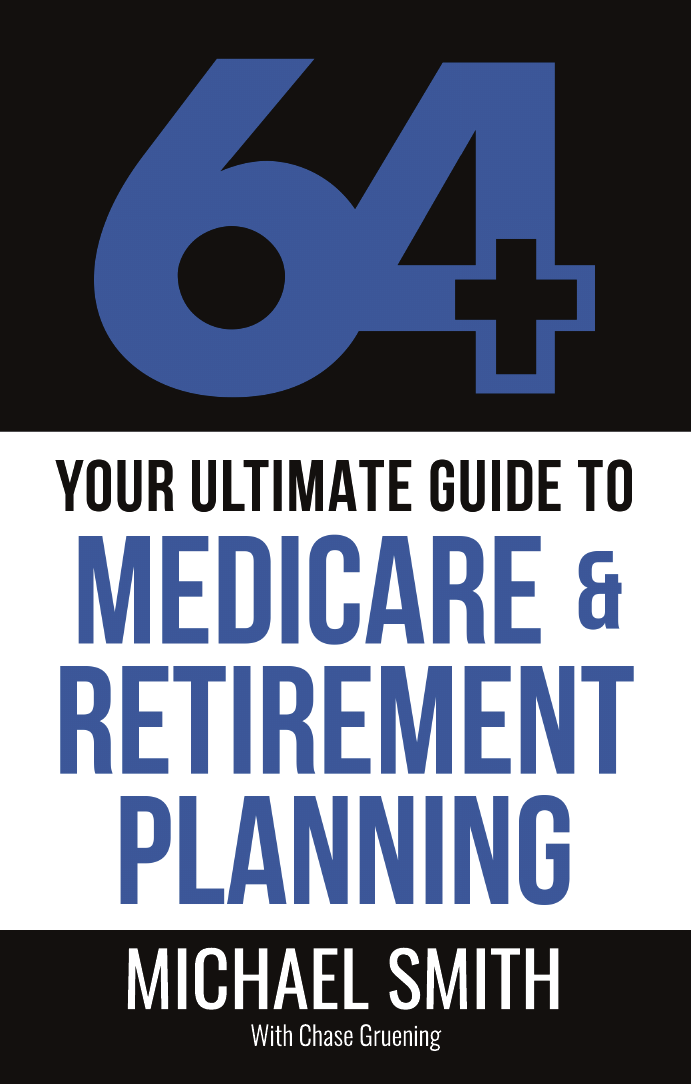
Read the 64+ Medicare guide
A calmer way to understand the moving pieces before you choose.
Call or text me directly at (270) 721-5069.
Questions people ask me about this
Who qualifies for extra help with Medicare?
Extra Help is based on income and limited savings, and the exact limits move depending on whether you’re single or married. It’s applied for through Social Security, not through a Medicare plan. If you’re close to the line, the fastest way to know is to check your specific numbers rather than guess from a general rule.
What’s the difference between Extra Help and Medicaid?
Extra Help is a federal program that lowers what you pay for prescription drugs, applied for through Social Security. Medicaid is a separate state-run program that can cover premiums, copays, and coinsurance across all of your medical care, not just drugs. You can qualify for one without the other, since the eligibility rules aren’t identical.
Can I have Medicare and Medicaid at the same time?
Yes — this is called being dual eligible, and it’s common. When it happens, Medicaid typically covers most of what Medicare leaves behind, and the plan conversation shifts toward a Medicare Advantage plan built for dual-eligible members rather than a supplement.
If I qualify for Medicaid, can I still buy a Medicare supplement?
Generally no, while Medicaid is active, because Medicaid is already covering the gap a supplement is designed to fill. If Medicaid is ever lost, that typically opens a window to buy a supplement without answering health questions, which is worth knowing about ahead of time.
Will losing Medicaid leave me without coverage?
No — you’d still have Medicare, and losing Medicaid usually opens a guaranteed-issue window to add a supplement without medical underwriting. The key is not letting that window pass unused, since it doesn’t stay open indefinitely.
Does having savings disqualify me from Extra Help or Medicaid?
Both programs have asset limits alongside income limits, and retirement accounts like a 401k or IRA typically count toward that limit. The exact threshold depends on your state and household size, so it’s worth checking your specific numbers rather than assuming either way.
How do I find out which category I actually fall into?
The fastest way is a short call where we go through your income, savings, and current coverage together. That’s usually enough to tell whether you’re looking at full Medicaid, Extra Help only, or neither.
Keep reading
Start with the basics
- Medicare Questions Answered
- Medicare 101: the whole picture
- Medicare Advantage explained
- 64+ — the free book
More questions I get asked
- Medicare Plan G vs Plan N: How I Walk Through the Trade
- Can You Be Denied a Medicare Supplement? The Timing Matters More Than People Think
- Cancer, Heart Attack, and Stroke Insurance With Medicare: When It Helps and When It Does Not
- Does Medicare Cover Dental, Vision, and Hearing? Where People Get Tripped Up
- Do You Need Hospital Indemnity With Medicare? The Gap It Is Really Solving
- Medicare Advantage vs. Original Medicare: How I Actually Walk Clients Through It
Find Medicare plans in your area
There are two different things here. First, if you want to see plan availability for your own ZIP code, use the plan lookup. That works by county, because Medicare Advantage and Part D availability changes at county lines. Second, the local county guides are an SEO/content library we are expanding to all 50 states, then down into county-level pages. Kentucky is the first live state layer, not the whole national structure.
Find plans by ZIP code Ask Michael to check it
State and county guide examples while the 50-state database expands:
What clients say




Written by Michael Smith, licensed insurance broker and founder of Guardian Health & Wealth in Bowling Green, Kentucky. I help people across the country make sense of Medicare — and I will tell you when the popular answer is not your answer.
Drawn from real conversations over the years. I never share anyone’s personal information — just the thinking, so you can see how a decision like this gets made.