


Plain-English answers to the Medicare questions people actually ask.
There isn’t a clean list of states that “have” the give-back and states that don’t. The Part B premium give-back is a benefit built into certain Medicare Advantage plans, and which plans are sold — and what they’re able to offer — is set at the county level, not the state level. You can have one county with a give-back worth well over a hundred dollars a month and a county thirty minutes away in the same state with none at all.
People ask the question by state because that’s how the ads and mailers frame it — “available in your state” — and because it feels like the kind of thing a government program would organize by state. It isn’t. It’s a competitive feature that individual plans choose to offer where the math works for them.
So the more useful question isn’t which states have it. It’s whether your specific zip code has it, what you’d be giving up to get it, and whether it beats the alternative — staying on Original Medicare with a Supplement. That’s the decision underneath the search, and it’s the one I actually walk people through.
Grab a time and I will tell you straight which path fits : and which does not.
Use the ZIP-code plan search. Availability changes by county, not by article.
Why does the give-back only show up in some places?
Medicare pays each Medicare Advantage plan a set monthly amount per member, and that amount is calculated county by county based on local healthcare costs, enrollment, and competition among plans in that area. In a county where a plan can manage care for less than what it’s being paid, and where it’s competing hard for members, it has room to hand some of that back to you as a reduction in your Part B premium. In a county where costs run higher or there’s less competition, that room doesn’t exist.
That’s why the give-back isn’t a state-level benefit. It’s a plan-level bid, filed annually, that can change from one contract year to the next — and can differ from one side of a county line to the other. A plan can offer a give-back in one county and not offer one at all just over the border, even under the same company.
None of that tells you whether taking it is the right move for you. It just explains why the search for “which states” doesn’t have a clean answer. The real answer lives in your zip code, and it changes every year plans file new bids — which is exactly why I’d rather look it up for your specific address than have you guess from a commercial.
Related: Read the plain-English guide to Medicare Questions Answered.
What I ask before the give-back number means anything
When someone calls me asking about a give-back, I don’t start by pulling up plans. I start with questions, because the size of the check has almost nothing to do with whether it’s the right fit.
- Who are your doctors, and are you attached to them? If everyone you see is already in the plan’s network, the biggest risk of taking a give-back disappears. If you’d have to switch even one specialist you trust, that’s a real cost the give-back has to outweigh.
- What’s realistically coming medically in the next year or two? Not a diagnosis — just the shape of it. Someone managing a known condition and someone who hasn’t needed more than an annual physical shouldn’t weigh the same trade the same way.
- Do you spend part of the year somewhere else, or travel out of the country? Advantage networks are local. A give-back plan that works well at home can be awkward on a long trip, and travel coverage isn’t automatic — it’s worth asking about specifically before you assume it’s included.
- What would an unplanned high-cost year do to your budget? Every Medicare Advantage plan has an annual out-of-pocket maximum, and that number matters more than the give-back — because it’s the number that describes your worst case, not your average case.
- How much do you want to manage this once you’re on it? A give-back plan with a network means occasional referrals and prior approvals. A Supplement means paying more up front to not think about any of that again.
The give-back amount only becomes a real answer once I know these five things. Before that, it’s just a number on a page.
- 1Are you attached to specific doctors?In-network access removes the biggest risk of a give-back plan
- 2What’s likely coming medically?Shapes how much the out-of-pocket max should weigh in
- 3Do you travel or split time elsewhere?Networks are local; a give-back plan may not travel well
- 4What would a high-cost year do to you?The out-of-pocket max matters more than the give-back amount
- 5How much do you want to manage this?Referrals and approvals vs. paying more for simplicity
Where these decisions usually land
Once we’ve been through the questions above, the conversation tends to settle into one of a few places — not because those are the only options, but because they’re the ones that actually fit most situations.
A Medicare Advantage plan with a give-back. Part of your Part B premium comes back to you, usually as a smaller deduction from your Social Security check. In exchange, you’re using that plan’s network, some services need prior approval, and your costs show up as copays as you go rather than one predictable monthly bill. This tends to fit someone whose doctors are already in-network, who’s comfortable managing referrals, and who wants the lower monthly cost.
A Medicare Advantage plan without a give-back. Some of the richest benefit packages — the ones with the widest networks or the lowest out-of-pocket maximums in an area — don’t offer a give-back at all, because the plan is putting that same money into the benefit design instead. If the plan without the give-back has meaningfully better access or a lower worst-case number, the give-back stops being the deciding factor.
Original Medicare plus a Supplement. You pay more every month, on purpose, so that the expensive years are predictable. There’s no network to manage and no prior approvals — any provider who accepts Medicare will see you. This tends to fit people with established specialists, an active health condition, or anyone who travels or splits time between two places.
See where you land. If you would rather just talk it through with someone who does this every day, Most people can sort the direction quickly once the doctors, drugs, budget, and timing are on the table.
Why I lean toward looking past the give-back number
If someone is on the fence, I usually steer the conversation away from the give-back amount itself, and toward the out-of-pocket maximum and the network. Here’s why.
The give-back is fixed and known — it’s printed on the plan’s summary of benefits. What it doesn’t tell you is what happens the year your health changes. That’s the year the network and the out-of-pocket maximum start to matter far more than a monthly credit ever did. I’ve sat with people who had a give-back worth a hundred dollars a month and a specialist visit that, because of a referral or authorization issue, cost them far more than that in time and frustration — not dollars, but the kind of friction that makes people wish they’d looked past the headline number.
There’s also a timing issue worth understanding early. In most states, your one guaranteed window to buy a Supplement without answering health questions is when you first become eligible for Medicare. After that window closes, insurers can generally ask health questions before issuing one. Going from a Supplement to an Advantage plan is usually simple. Coming back the other way, later, isn’t guaranteed to go the same way — which is part of why I’d rather help someone think this through up front than have them discover the asymmetry after the fact.
When I’d point you the other way
I’d be doing you a disservice if I only argued one side of this. There are real situations where I’d recommend a give-back plan without hesitating.
When the monthly budget genuinely doesn’t stretch. A Supplement premium is real money every month. If paying it means cutting into something else that matters, a zero- or low-premium Advantage plan — give-back or not — isn’t a compromise. It’s the responsible answer.
When your doctors are already in the network and you’re not planning to move. The main objection to a network plan evaporates when the network already matches your life.
When you qualify for both Medicare and Medicaid. The math changes completely. There are Advantage plans built specifically for people with both, and a give-back on top of that combination is often a straightforward call.
When you’re a genuinely low utilizer with no attachment to specific providers. Someone who sees a doctor once a year, takes no expensive medications, and doesn’t have a strong preference about who they see is exactly the person a give-back plan was designed for.
Which side of that line are you on?
That is exactly the question a short Medicare conversation settles. You get me, not a call center.
What surprises people about the give-back
Two things catch people off guard almost every time.
First, the confusion about why a company would do this at all.
Why would they be willing to pay for your plan? I don’t understand.
It’s a fair question, and the honest answer is that it isn’t generosity — it’s how a plan competes for your enrollment in a specific county where the numbers work in its favor. Understanding that turns the give-back from a mystery into a trade you can actually evaluate.
Second, people are surprised that the give-back isn’t a check. It shows up as a smaller deduction from your Social Security payment, or as a credit if you pay your Part B premium directly. It also isn’t guaranteed to stay the same — plans re-file their bids every year, and a give-back can shrink, grow, or disappear from one January to the next, in the same county, on the same plan.
And most people are surprised by how small a role the state actually plays in any of this once they understand it’s a county-level bid. Two people in the same state, in different counties, can be looking at completely different give-back numbers and completely different plan lineups — which is exactly why a generic answer about “which states” was never going to serve you as well as a look at your own zip code.
See what’s actually available where you live
The only way to know whether a give-back exists in your county, what it’s worth, and what it costs you in network or out-of-pocket risk is to look at your specific zip code — not a state-level list. I do this every day, and I’ll walk you through exactly what’s on the table, including the plans without a give-back if those turn out to be the stronger option.
Call or text (270) 721-5069, or book a time that works for you. There’s no cost, and if a give-back plan turns out to be a bad fit for your situation, I’ll tell you that directly.
Ready to find out where you actually stand?
I am an independent broker. I work with multiple carriers, which means I do not have a plan I need to sell you. What I have is a set of questions, and about fifteen minutes to find out which path fits.
Schedule a Medicare call
Pick a time. Bring your medications and doctors. That is the homework.
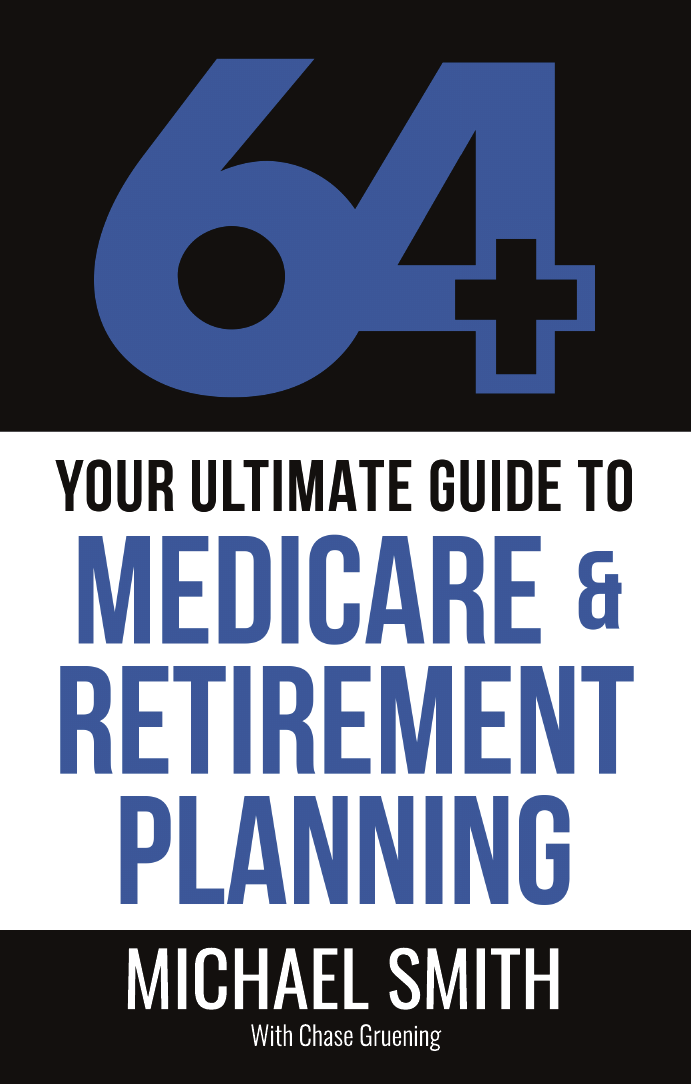
Read the 64+ Medicare guide
A calmer way to understand the moving pieces before you choose.
Call or text me directly at (270) 721-5069.
Questions people ask me about this
Is the Medicare give-back available in every state?
No. It’s not organized by state at all — it’s a feature some Medicare Advantage plans offer, and availability is set county by county based on local costs and competition. Two counties in the same state can have completely different give-back amounts, or none at all.
How do I find out if my county has a give-back plan?
The reliable way is to have someone look up plans filed for your specific zip code, since give-back availability changes every year as plans re-file their bids. Call or text (270) 721-5069 and I’ll check what’s actually available where you live.
Does the give-back come as a check?
No. It typically shows up as a smaller deduction from your Social Security payment, or as a credit if you pay your Part B premium directly to Medicare. You won’t see a separate deposit.
Can a give-back plan lose the give-back later?
Yes. Plans refile their benefits every year, and a give-back amount can shrink, grow, or disappear from one plan year to the next, even if you stay enrolled in the same plan.
Is a bigger give-back always the better deal?
Not necessarily. The give-back is one fixed, known number, while your network access and out-of-pocket maximum determine what happens in an expensive year. A smaller give-back attached to a stronger network or lower out-of-pocket cap can be the better overall deal.
If I take a give-back plan, can I switch to a Supplement later?
Sometimes, but it isn’t guaranteed. Your one automatic window to buy a Supplement without health questions is generally when you first become eligible for Medicare. After that, insurers can typically ask health questions before issuing a Supplement policy.
Keep reading
Start with the basics
More questions I get asked
- How Does the Medicare Give-Back Program Work? Here’s the Trade Behind It
- Can You Be Denied a Medicare Supplement? The Timing Matters More Than People Think
- Recovery Care and Home Health Care With Medicare: The Part People Usually Assume Wrong
- Medicare Advantage vs. Original Medicare: How I Actually Walk Clients Through It
Find Medicare plans in your area
Medicare Advantage and Part D availability can change by county. Use your ZIP code for current local options, or browse the state guides for a plain-English overview of what to check where you live.
Find plans by ZIP code Ask Michael to check it
What clients say




Written by Michael Smith, licensed insurance broker and founder of Guardian Health & Wealth in Bowling Green, Kentucky. I help people across the country make sense of Medicare : and I will tell you when the popular answer is not your answer.
Drawn from real conversations over the years. I never share anyone’s personal information : just the thinking, so you can see how a decision like this gets made.