


Plain-English answers to the Medicare questions people actually ask.
Your Medicare Supplement moves with you. That’s the short answer: a Supplement works alongside Original Medicare, and any provider anywhere in the country who accepts Medicare has to accept your Supplement too. Crossing a state line doesn’t cancel your policy, and it doesn’t leave you without coverage the day the moving truck pulls away.
What does change is quieter, and straight more important. Your premium is generally tied to the state where you bought the policy, not the state where you’re living today, and a lot of people assume those two things automatically update together. They don’t. If you want to trade your current policy for one priced in your new state, you’re walking back into medical underwriting, not walking through an open door.
This is really a question about underwriting, dressed up as a moving question. The answer depends almost entirely on one thing: how your health today compares to your health the day you first signed up.
It also gets tangled up with a different question people bring me — what happens to a Medicare Advantage plan when you move. Those are two very different products with two very different answers, and mixing them up is where most of the worry comes from. This is specifically about the Supplement side of it.
Grab a time and I will tell you straight which path fits : and which does not.
Use the ZIP-code plan search. Availability changes by county, not by article.
Why this question comes up so often
Some people asking haven’t moved yet — they’re planning to, a year or two out, and want to know if their coverage will survive the trip. Others already have boxes stacked in the garage and are calling because a call center gave them a vague answer, or because a letter from their carrier mentioned a rate change and it worried them.
The people who worry about this most tend to fall into a few groups: retirees relocating permanently to be near family or better weather, people who split the year between two homes and need coverage to work in both without a gap, and people who are still working and want the rules settled before retirement and a move hit at the same time. That last group has it hardest — they’re managing two big transitions at once, and it’s easy to lose track of which deadline belongs to which decision.
One caller put the seasonal version of this worry about as plainly as I’ve heard it:
What would happen if I needed care out here between December and eventually go home, so to speak, next April? How would that work over those months?
That’s the real question underneath most of these calls. It isn’t really about paperwork. It’s about whether you’ll be covered the day you actually need care, wherever you happen to be standing when it happens. With a Supplement, the answer is straightforward. With a Medicare Advantage plan tied to a county network, it’s a completely different conversation — and that difference is exactly where the confusion starts.
Related: Read the plain-English guide to Medicare Supplement.
What I ask first
Before I tell anyone whether to keep their policy or shop for a new one, I need six answers. None of them are complicated, but skipping any one of them is how people end up making a decision they regret.
- 1. When is the move, and is it permanent? A move next month calls for different timing than a move you’re still two years out from, and a snowbird arrangement is a different question than a clean, permanent relocation.
- 2. What state are you moving to, and what’s the zip code? Premiums are set state by state, sometimes county by county, and the same coverage can cost meaningfully more or less depending on where you land.
- 3. Has anything changed with your health since you first bought the policy? This is the single biggest factor in the whole decision. If the honest answer is yes, that changes what I’d recommend before we talk about anything else.
- 4. Are you keeping a legal residence in your current state, or is this a full move? Where you’re legally domiciled affects your premium, your paperwork, and sometimes your taxes.
- 5. What’s actually driving the move? Family, cost of living, climate, a job — the reason usually tells me the timeline, and the timeline tells me what’s actually on the table.
- 6. Do you know whether you’re inside a special enrollment window right now? Certain events, like leaving a Medicare Advantage plan’s service area, reopen the door to buy a new Supplement with no health questions. Most moves don’t. It matters which situation you’re in.
- 1Move date — permanent or not?Sets the timeline and whether it’s a clean break or a split
- 2New state and zip codePremiums and carrier options vary a lot by state
- 3Health changed since enrolling?Biggest single factor in whether reshopping makes sense
- 4Snowbird or full relocation?Determines if you need to think about networks at all
- 5What’s driving the move?Job, family, cost of living — shapes the timeline
- 6Inside a special window now?Some triggers reopen no-health-question buying; most don’t
Where this actually lands
Nearly every one of these conversations lands in one of three places.
Path one — you keep the policy exactly as it is. Because a Supplement isn’t a network product, your existing policy keeps paying claims the same way in your new state that it did in your old one. You update your mailing address with your carrier so billing and any correspondence follow you, and otherwise nothing changes. This is the simplest path, and it’s the right one for most people who are healthy enough that reshopping wouldn’t save much, or whose health has changed enough that reshopping isn’t realistic.
Path two — you apply for a new policy priced for your new state. States regulate these rates differently, so the same coverage can genuinely cost less somewhere else. If your health is still clean, it’s worth getting a real quote before assuming your current premium is the best available. The trade is underwriting: unless you’re inside a guaranteed-issue window, the new carrier can ask health questions and can decline you or price you higher. You never cancel the old policy until the new one is actually approved and in force.
Path three — you were on a Medicare Advantage plan, not a Supplement, and the move forces the issue. Advantage plans are built around a county-level network. Move outside that service area and the plan can’t cover you there at all — you’re not choosing whether to change, you’re finding a new plan or a Supplement either way. The one upside in this path: leaving an Advantage plan’s service area is one of the events that does open a guaranteed-issue window for a Supplement, no health questions asked, if you use it in time.
See where you land. If you would rather just talk it through with someone who does this every day, Most people can sort the direction quickly once the doctors, drugs, budget, and timing are on the table.
Why I lean the way I lean
If someone’s health has changed at all since they bought their policy — a new diagnosis, a new medication, anything that would show up on an application — I lean hard toward path one: keep what you have, and don’t touch it.
The reasoning is simple. A Supplement you already own can’t be taken away from you for using it, and it can’t be cancelled for health reasons once you’re on it. A Supplement you’re applying for fresh in a new state can absolutely be declined, or issued at a higher rate, based on what’s changed. You’d be trading a guaranteed thing for a maybe, and the guaranteed thing is the one already doing its job.
Even for someone whose health hasn’t changed, I usually only recommend reshopping when the new state’s pricing is enough of a gap to matter — not a few dollars a month, but a difference that adds up over years. Applying for a new policy costs you nothing but time and paperwork, but it does put your current good health in front of an underwriter, and there’s no upside to that if the savings are small.
When I’d tell you the opposite
I wouldn’t tell everyone to sit tight. There are real situations where shopping the new state is exactly right, and I’d say so without hesitating.
When you’re moving out of a Medicare Advantage plan’s service area. This isn’t optional, and it isn’t a choice between keeping and switching — the plan you had can’t follow you. Use the guaranteed-issue window it opens and get into a Supplement or a new Advantage plan before that window closes, not after.
When you haven’t used your original guaranteed-issue window yet. If you’re newer to Medicare and still inside that first enrollment period when the move happens, timing your application for after you land in the new state can work in your favor, since you’re buying with no health questions either way.
When the new state is meaningfully cheaper and you’re still healthy. If a real quote shows a genuine gap and your health hasn’t changed since you first enrolled, there’s very little reason not to apply. Worst case, you’re declined and you keep exactly what you already have — you’ve lost nothing but a few minutes.
When your current carrier simply doesn’t sell in your new state. This is less common than people fear, but it happens. If it does, you’re not choosing to reshop, you have to, and the sooner you start, the more runway you have before you’d otherwise be paying out of pocket with no policy behind you.
Which side of that line are you on?
That is exactly the question a short Medicare conversation settles. You get me, not a call center.
What surprises people
Two things catch people off guard almost every time.
The first is that moving, by itself, usually doesn’t open a guaranteed-issue window for a Supplement. People hear about special enrollment periods somewhere and assume it applies to any life change, including a move. For a Supplement it mostly doesn’t — the trigger events are specific, and a simple relocation while you’re already happily covered isn’t one of them in most cases. That’s exactly why I lean toward keeping the policy you already have: once it’s issued, you don’t need a window to keep using it.
The second surprise is that a Supplement staying put doesn’t mean everything about your coverage stays put. Your Part D drug plan almost certainly needs a second look. Drug plans are built around regional pharmacy networks and formularies, so the plan that made sense at your old address may not even be sold at your new one, or may price out very differently for the same medications. People spend all their attention worrying about the Supplement and forget the drug plan sitting right next to it is the piece that actually needs a fresh look.
Before you pack the truck
If you’ve got a move on the calendar, two things are worth doing before the truck is loaded: get a real quote for your new state so you know whether reshopping is even worth it, and find out exactly which window, if any, you’re standing inside. Both take one phone call.
Call (270) 721-5069 or book a time that works for you, and bring your zip code and your current policy details. I’ll tell you straight whether keeping what you have or shopping fresh is the better move for your situation — not a general rule, your situation.
Ready to find out where you actually stand?
I am an independent broker. I work with multiple carriers, which means I do not have a plan I need to sell you. What I have is a set of questions, and about fifteen minutes to find out which path fits.
Schedule a Medicare call
Pick a time. Bring your medications and doctors. That is the homework.
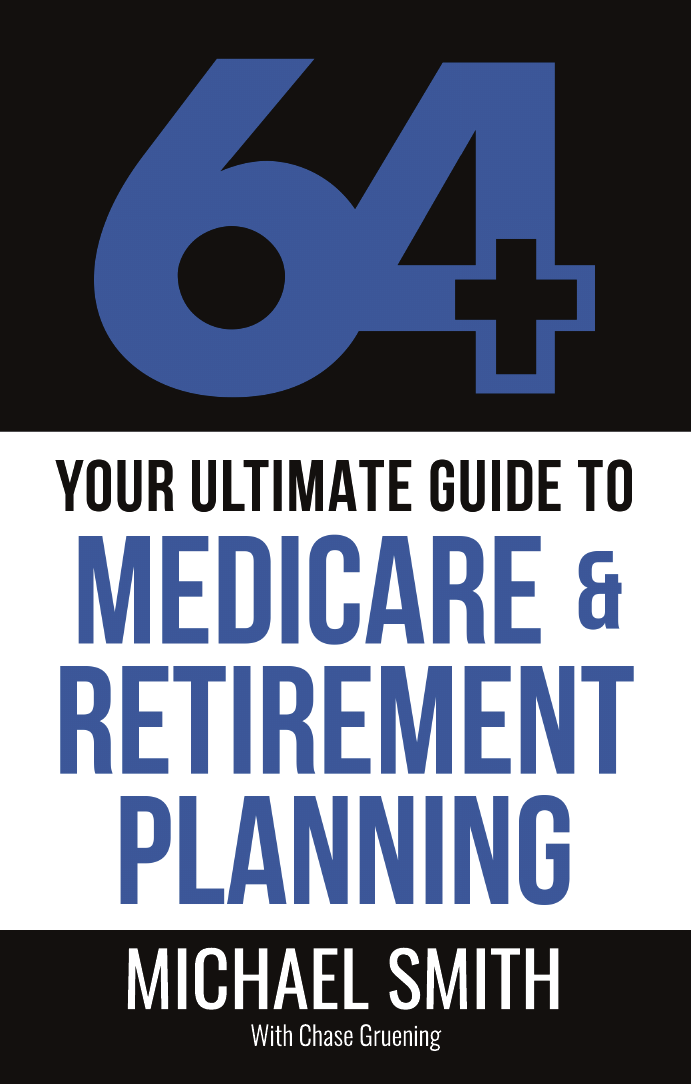
Read the 64+ Medicare guide
A calmer way to understand the moving pieces before you choose.
Call or text me directly at (270) 721-5069.
Questions people ask me about this
Does my Medicare Supplement cancel if I move to another state?
No. A Supplement works alongside Original Medicare, and any provider nationwide who accepts Medicare has to accept your policy too. Moving doesn’t cancel it or create a coverage gap — you simply update your mailing address with your carrier.
Will my premium change when I move?
Not automatically. Your premium is generally based on the state where you bought the policy, not where you currently live, so most people keep paying what they were already paying. If you want a premium priced for your new state, you’d need to apply for a new policy there, which usually means answering health questions.
Can I switch to a cheaper Supplement in my new state without health questions?
Usually not just because you moved. Guaranteed-issue rights are tied to specific events, like turning 65 or leaving a Medicare Advantage plan’s service area. A simple relocation while you’re already on a Supplement typically isn’t one of them, so a new application usually means underwriting.
What happens to a Medicare Advantage plan if I move instead of a Supplement?
That’s a different situation entirely. Advantage plans are built around a county-level network, so moving outside that area means the plan can no longer cover you there. You’ll need a new Advantage plan in the new area or a Supplement, and the move itself opens a guaranteed-issue window to do it without health questions.
Does my Part D drug plan move with me too?
Not automatically, and it’s worth checking separately. Drug plans are built around regional pharmacy networks and formularies, so the plan that worked at your old address may not be available, or may not be the best price, at your new one.
What if I split my time between two states?
Your Supplement still works in both, since it isn’t tied to a network. The bigger question is which state counts as your legal residence, since that affects your premium and your paperwork. It’s worth sorting out before the move, not after.
How do I find out if I’m inside a guaranteed-issue window right now?
It depends on your specific timeline: when you first enrolled in Medicare, what coverage you’re leaving, and what state you’re moving to or from all factor in. The fastest way to know for certain is to call and walk through your dates directly.
Keep reading
Start with the basics
More questions I get asked
- What Happens to Your Medicare Plan When You Move to Another State
- Can You Be Denied a Medicare Supplement? The Timing Matters More Than People Think
- Recovery Care and Home Health Care With Medicare: The Part People Usually Assume Wrong
- Still Working at 65? Here’s Whether Medicare Is Required Right Now
Find Medicare plans in your area
Medicare Advantage and Part D availability can change by county. Use your ZIP code for current local options, or browse the state guides for a plain-English overview of what to check where you live.
Find plans by ZIP code Ask Michael to check it
What clients say




Written by Michael Smith, licensed insurance broker and founder of Guardian Health & Wealth in Bowling Green, Kentucky. I help people across the country make sense of Medicare : and I will tell you when the popular answer is not your answer.
Drawn from real conversations over the years. I never share anyone’s personal information : just the thinking, so you can see how a decision like this gets made.